Blog ·
Why lullabies work: the science of calm songs at bedtime
Babies relax to lullabies even in languages they've never heard. Here's what researchers found, and how to use calm songs at bedtime.
Lullabies turn up in cultures all over the world, and parents have sung them for generations. But why does a slow, gentle song seem to settle a baby so well, even a baby who has never heard it before? Recent research gives some lovely answers.
Babies relax to lullabies they have never heard
In a study published in Nature Human Behaviour, researchers at Harvard's Music Lab played 144 American babies short clips of songs from around the world, sung in languages like Scottish Gaelic and Hopi. Some were lullabies; others were dance songs, love songs or healing songs from the same societies.
While the babies listened, the team measured their heart rate, pupil size and tiny changes in skin sweat, which all rise when we are alert and fall when we relax. Heart rates fell as soon as any singing began, but they fell further during the lullabies. The babies also blinked less, as if they were listening more closely.
The surprising part: neither the babies nor their parents knew any of the songs or languages. Something in the music itself was doing the calming. And when parents were asked which songs they would sing to settle a fussy baby, they overwhelmingly picked the lullabies too.
What makes a song a lullaby?
An earlier large study of songs from cultures across the world found that lullabies share features wherever they come from: slower tempos and smooth melodies without sharp accents. Dance songs, by contrast, are driven by strong, bouncy rhythms.
One of the researchers suggested this could mean there are ways to make the music we give babies even more soothing. That is exactly the idea behind calm children's music: keep the tempo slow, the melody smooth and the words simple.
What this doesn't tell us
It is worth being clear about the limits. The Harvard study measured short-term relaxation in a lab, in babies aged roughly 2 to 14 months. It didn't measure sleep, and it didn't compare live singing with recordings. Your own voice may matter more than any recording, because to your baby it is the most familiar and reassuring sound there is.
A calm-song bedtime routine
- Same songs, same order. Repetition helps little ones predict what comes next, and predictability is calming.
- Slow down as you go. Start with something gently playful, then finish with your slowest, quietest song.
- Sing it yourself where you can. Even if you don't think you can sing, your baby disagrees.
- Audio rather than video near bedtime. The WHO recommends no screen time for babies under one, and suggests reading and storytelling with a caregiver instead. A song playing from a speaker in a dim room keeps the focus on listening.
- Dim the lights and lower your voice. Let the whole room slow down with the music.
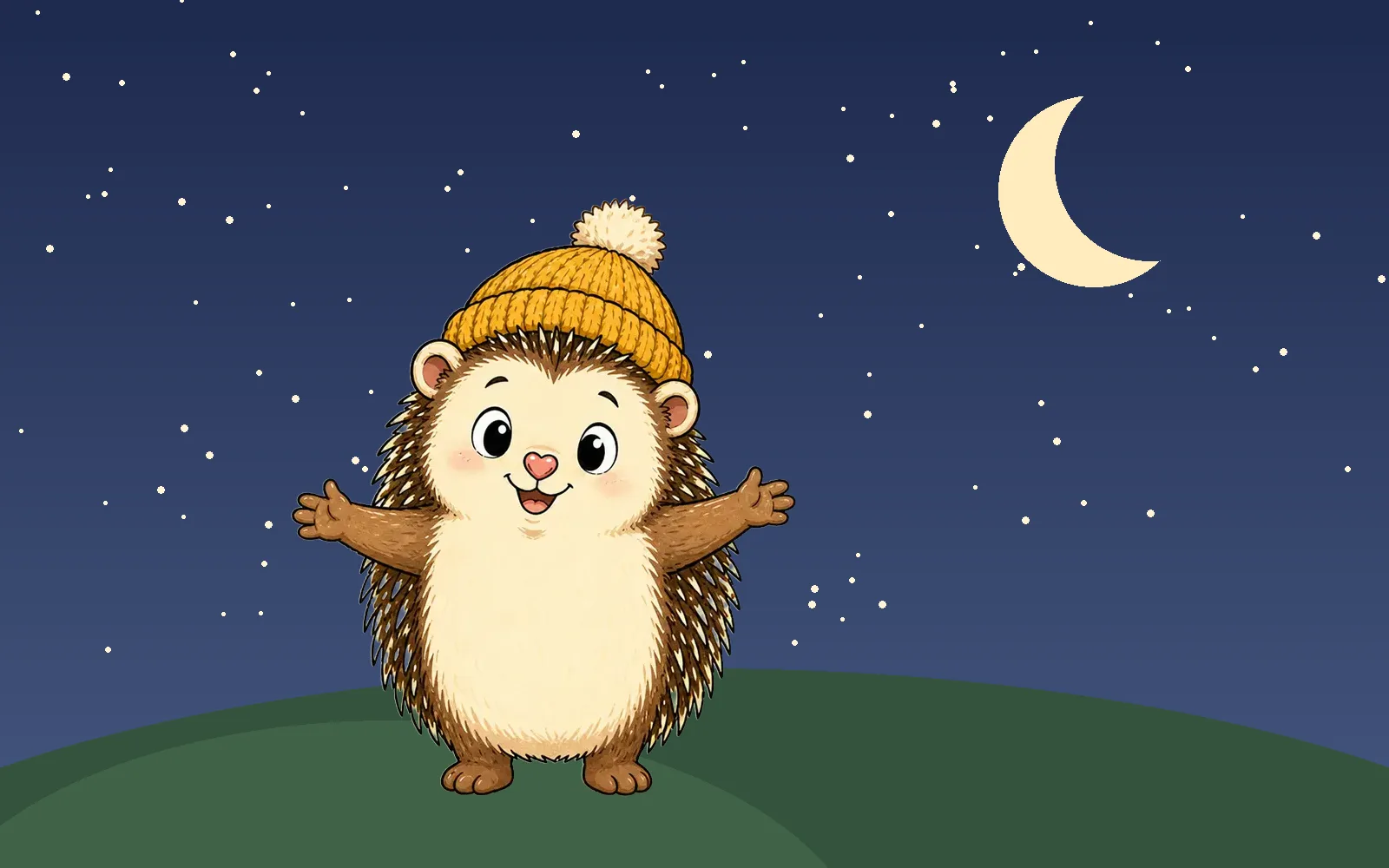
Our bedtime song Poppy Peep is about a little hedgehog who stays up all night and finally learns why sleep feels so good. Buzzy Bee Don't Cry ends with a whispered goodbye that many parents use as their last song of the day.
For the wider picture on calm content and toddlers, read Is low-stimulation content really better for toddlers?
References
- Bainbridge, C. M., Bertolo, M., Youngers, J., et al. (2021). Infants relax in response to unfamiliar foreign lullabies. Nature Human Behaviour, 5, 256–264. doi.org/10.1038/s41562-020-00963-z
- Harvard Gazette (October 2020). Research shows lullabies in any language relax babies. news.harvard.edu
- British Psychological Society Research Digest (November 2020). Babies relax when listening to unfamiliar lullabies from other cultures. bps.org.uk
- Mehr, S. A., Singh, M., et al. (2019). Universality and diversity in human song. Science, 366(6468), eaax0868. doi.org/10.1126/science.aax0868
- World Health Organization (2019). Guidelines on physical activity, sedentary behaviour and sleep for children under 5 years of age. who.int
New calm songs every monthSubscribe