
Low-stimulation songs for toddlers
Calm, slow and gentle songs for toddlers, preschoolers and babies. Original nursery rhymes with soft voices, steady tempos and one quiet garden to watch, made to soothe little listeners rather than wind them up.
Watch the Low Stimulation Songs for Toddlers playlist on YouTube →
What are low-stimulation songs?
Low-stimulation songs give young children room to keep up. There’s no official definition, but parents and early-years professionals usually mean songs with:
- A steady, unhurried tempo, so little ones can follow the words and actions.
- Soft, natural voices, with no shouting and no squeaky, sped-up singing.
- Simple words that repeat, so children can join in by the second chorus.
- Few sudden sounds, so nothing makes them jump.
- Calm pictures, if there’s a video: scenes held long enough to take in, soft colours and one familiar place.
More and more parents are looking for this kind of content. In a social media poll by The Bump, 80 percent of parents said they seek out low-stimulation shows for babies and toddlers. Research points the same way: in a well-known study, four-year-olds did worse on attention and self-control tasks straight after nine minutes of a fast-paced cartoon than children who watched a slower programme. It was a small study, but a telling one. Read what the research says.
Calm songs for toddlers at bedtime
Our slowest, quietest songs, for the last part of the day.

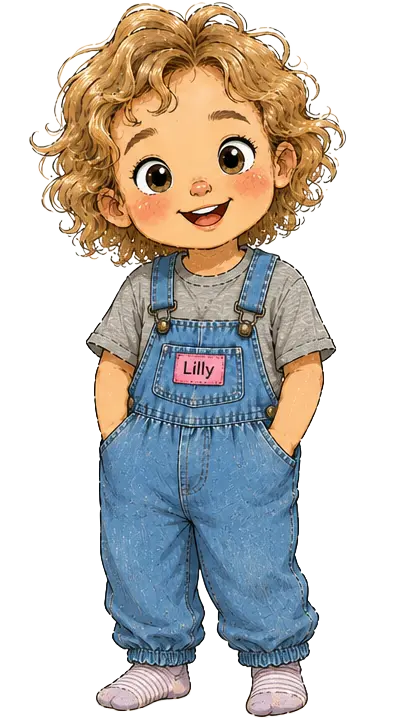
Twinkle Twinkle Little Star
The classic lullaby with gentle new verses: the garden goes to sleep and the stars come out one by one.
Read the story & lyrics →
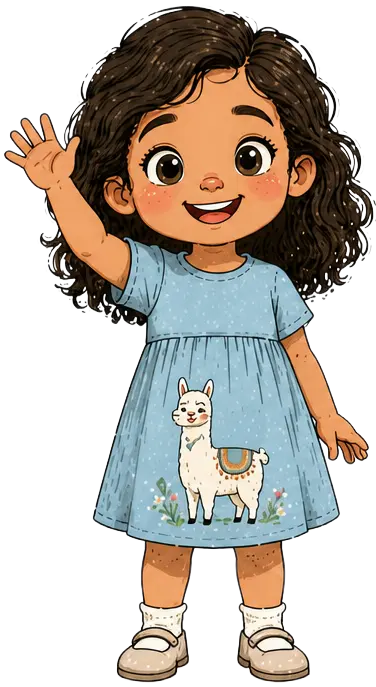
The Garden Says Good Night
Mum puts the girls to bed while, out of the window, the whole garden goes to sleep too.
Read the story & lyrics →
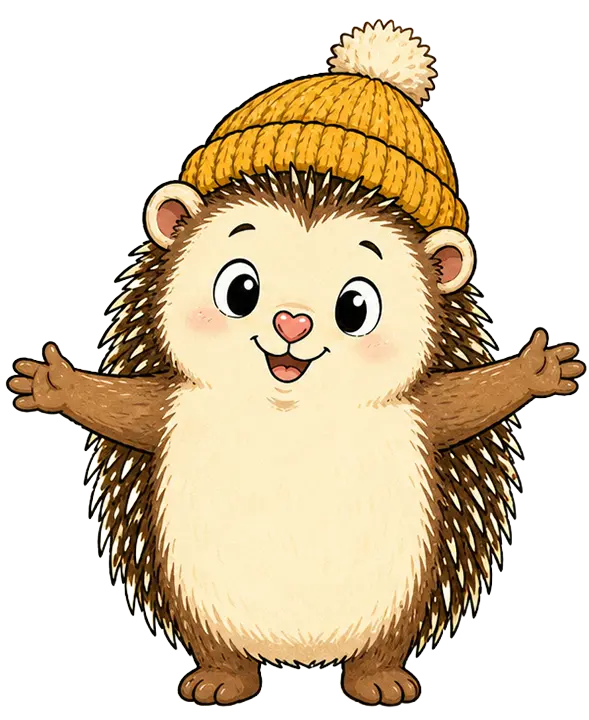
Poppy Peep
The hedgehog who never goes to sleep. A gentle bedtime song about sleeping at night.
Read the story & lyrics →
Buzzy Bee Don't Cry
A kindness song about helping a little bee who lost her tree.
Read the story & lyrics →Slow nursery rhymes for learning
Counting, colours, days and seasons, sung slowly enough for little ones to follow.

The Four Seasons Song
Falling leaves, puddles, singing robins and long sunny days. Can you guess the season?
Read the story & lyrics →
Days of the Week
Seven days, seven garden jobs. Sing them, shout them back, then stamp, clap and dance.
Read the story & lyrics →
How Do Vegetables Grow?
Plant it, water it, wait for it. How carrots, radishes and beetroot grow from tiny seeds.
Read the story & lyrics →
What Do You Do?
Mud, stones and puddles. A call-and-response song about looking after your shoes.
Read the story & lyrics →
Ten Red Apples
A counting-down song. Ten red apples, one breezy tree, and lots of numbers.
Read the story & lyrics →
Five Little Pots
What do you plant in five little pots? A counting and colours planting song.
Read the story & lyrics →Gentle movement songs
Calm doesn’t mean still. These songs get little bodies moving with a steady beat and pauses to join in, without the frenzy.


We’re Digging a Pond
Soil up, soil down! Diggy and Lilly dig a wildlife pond for frogs, bees, robins and dragonflies.
Read the story & lyrics →
Hide and Seek
Count to ten, no peeking! Then find Lilly, Poppy, Rosy and Diggy hiding in the garden.
Read the story & lyrics →
The Garden Dance Song
Shake, jump, dig and drop! Eight easy dance moves that teach how to plant a real seed.
Read the story & lyrics →
Pick Pick Pick
Do you want to see a trick? Learn how to pick apples, tomatoes and carrots.
Read the story & lyrics →
Diggy Dots
There's a badger in my garden. The cheeky night-time badger digging song.
Read the story & lyrics →
Weedy Weedy Weeds
The carrot seeds aren't growing. Time to dig, dig, dig the weeds!
Read the story & lyrics →Songs about feelings
Naming big feelings gently: sharing, being brave and being kind.

Halloween Pumpkins Song
Plant, pick, scoop and sing about orange, white, green and blue pumpkins. A Halloween song that isn’t scary.
Read the story & lyrics →
A Picnic in the Garden
“It’s not fair!” “Don’t worry, I will share.” A picnic song about sharing what you love.
Read the story & lyrics →
Happy Birthday to You
A calm garden-party Happy Birthday with no names in it, so it works for every child.
Read the story & lyrics →
Ow Ow Ow
A gentle action song about prickly plants and the lovely things that are safe to touch.
Read the story & lyrics →Sensory-friendly songs: what to listen for
Some children are especially sensitive to sound and busy pictures. Every child is different, but a few things often help:
- Keep it predictable. The same songs in the same order become a comforting routine.
- Keep the volume low and avoid songs with sudden loud effects.
- Try audio only when screens feel like too much. Our songs work just as well as music.
- Watch together and notice. If your child seems wound up afterwards, choose a slower song next time.
If your child has sensory processing differences, their health visitor, GP or occupational therapist can suggest what works best for them.
Non-overstimulating music for babies
For babies, music is better than screens. The World Health Organization recommends no screen time at all for babies under one, so play the audio and let your voice do the rest. Lullabies are made for this: songs for babies around the world tend to share slow tempos and smooth melodies, and in one study babies relaxed when they heard lullabies, even in languages they had never heard. Read more about why lullabies work.
Good places to start: Twinkle Twinkle Little Star and The Garden Says Good Night.
More calm ideas
Questions parents ask
What are low stimulation songs for toddlers?
They’re songs with a steady tempo, soft natural voices, simple repeated words and few sudden sounds. When there’s a video, it uses calm pictures held long enough for a toddler to take in, soft colours and few scene changes.
Is My Garden Songs low stimulation?
Yes, by design. Our videos use slow pacing, held pictures, soft watercolour colours, warm British voices and one familiar garden. Our action songs are livelier, but they keep a steady beat and leave pauses for children to join in.
Are low-stimulation songs better for toddlers?
There isn’t much research on low-stimulation content as a category yet, but studies on fast pacing and on lullabies point in the same direction: slower, gentler content is easier for young children to follow and calmer to switch off. Read our summary of the research.
What are good calm songs for toddlers at bedtime?
Try Twinkle Twinkle Little Star, The Garden Says Good Night and Poppy Peep, and finish with the slowest one.
Is there a playlist?
Yes. Watch the free Low Stimulation Songs for Toddlers playlist on YouTube, or listen on Spotify and Apple Music.
What ages are the songs for?
Toddlers and preschoolers, roughly ages 1 to 6. For babies under one, we suggest playing the songs as music rather than video.
References
- Lillard, A. S. & Peterson, J. (2011). The immediate impact of different types of television on young children’s executive function. Pediatrics, 128(4), 644–649. doi.org/10.1542/peds.2010-1919
- Bainbridge, C. M., Bertolo, M., et al. (2021). Infants relax in response to unfamiliar foreign lullabies. Nature Human Behaviour, 5, 256–264. doi.org/10.1038/s41562-020-00963-z
- Mehr, S. A., Singh, M., et al. (2019). Universality and diversity in human song. Science, 366(6468), eaax0868. doi.org/10.1126/science.aax0868
- World Health Organization (2019). Guidelines on physical activity, sedentary behaviour and sleep for children under 5 years of age. who.int
- The Bump. What are the best low-stimulation shows for toddlers? thebump.com